
The Great VPN Cartel: Who Really Controls the Market
Behind dozens of VPN brands stand a handful of corporate groups, affiliate lists, and purchased awards. What you should know before trusting any service.
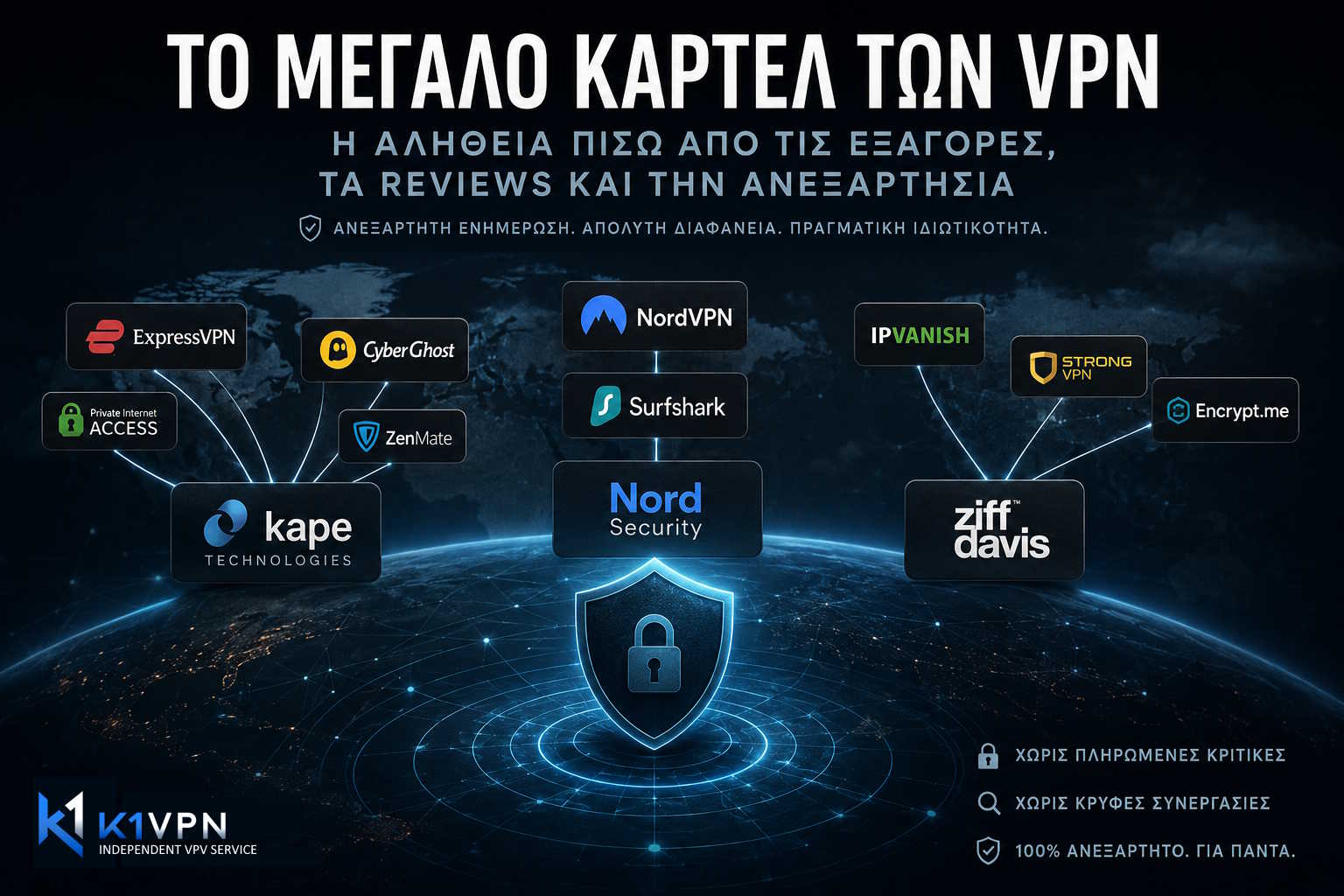
When you buy a VPN, do you really know who you are buying it from?
If you search Google today for terms like "Best VPN," "Top VPN 2026," or "Most Secure VPN," you will find hundreds of websites with comparisons, ratings, and recommendations. At first glance, it looks like dozens or even hundreds of different companies are competing for your attention.
The reality is quite different.
In recent years, the VPN market has gone through an unprecedented period of consolidation. Through a steady stream of acquisitions and mergers, a handful of large corporate groups have gained control of many of the world's best-known VPN brands. Behind dozens of different logos, websites, and advertising campaigns, the same parent company is often standing.
This does not mean these VPNs are necessarily bad or unsafe. It does mean, however, that the picture consumers see is quite far from reality - and that is something every user should know before trusting a service that handles their entire online activity.
A market that changed hands quietly
About ten years ago, the VPN market consisted mainly of small independent companies. Most were founded by software engineers, cybersecurity specialists, privacy activists, or small teams of developers with a common goal: protecting user privacy.
But as the market grew and revenues rose, investment funds and large corporate groups began to notice an extremely profitable opportunity. A wave of acquisitions followed, in most cases going unnoticed by users. The brands stayed the same. The logos didn't change. But the owner behind them was now someone entirely different.
Today, several of the best-known VPN brands belong to the same corporate groups, even though they still present themselves as separate, independent companies.
The groups that control the market
Kape Technologies is perhaps the most characteristic example of this consolidation. Within a few years it acquired some of the biggest names in the industry: ExpressVPN, CyberGhost, Private Internet Access (PIA), and ZenMate. It's worth noting that the company was previously known as Crossrider, before changing its corporate identity and business strategy.
Nord Security started with NordVPN and gradually grew into a large cybersecurity group. Its ecosystem today includes, among others, NordVPN and Surfshark, while in the past it had also acquired Atlas VPN, which was later fully merged into NordVPN.
Ziff Davis is one of the largest technology groups in the United States. Beyond well-known tech media outlets, it also owns several VPN services, including IPVanish, StrongVPN, Encrypt.me, and SaferVPN. The presence of such a large group in the market shows how much the landscape has changed since the days of small independent developer teams.
Point Wild, formerly known as Aura and even earlier as Pango, brings together in its portfolio services such as Hotspot Shield, Betternet, Touch VPN, Ultra VPN, and OVPN.
The result is that a consumer who thinks they are comparing ExpressVPN, CyberGhost, and Private Internet Access is, in practice, evaluating three services from the same group. The illusion of choice is complete. Many brands, few real owners.
Why it matters who is behind a VPN
Many will wonder: "Why should I care who the owner is?"
The answer lies in the very nature of the service. When you use a VPN, you entrust it with your entire internet traffic. A VPN is the intermediary between you and the Internet - and that position carries enormous responsibility.
It is not enough, then, to look only at speeds, server counts, and prices. It's equally important to know who owns the company, what its corporate structure looks like, how transparent it is, and whether it makes decisions based on privacy or purely on the profitability and growth of the group it belongs to.
A large company has to take into account investors, shareholders, growth targets, acquisitions, corporate synergies, and financial returns. A truly independent company can focus exclusively on its product and its customers. Independence is not, by itself, a guarantee of quality. It is, however, a fundamentally different operating philosophy.
Can you trust "Best VPN" lists?
Try a simple experiment. Open a new browser tab and search for "Best VPN," "Fastest VPN," or "Best VPN for Netflix." You will most likely find dozens of nearly identical lists that usually show the same names in the top spots, all with impressive scores: 9.9/10, Editor's Choice, #1 VPN, Best Overall.
The impression created is that these are independent expert evaluations. In reality, though, the business model behind most comparison websites is far more complex.
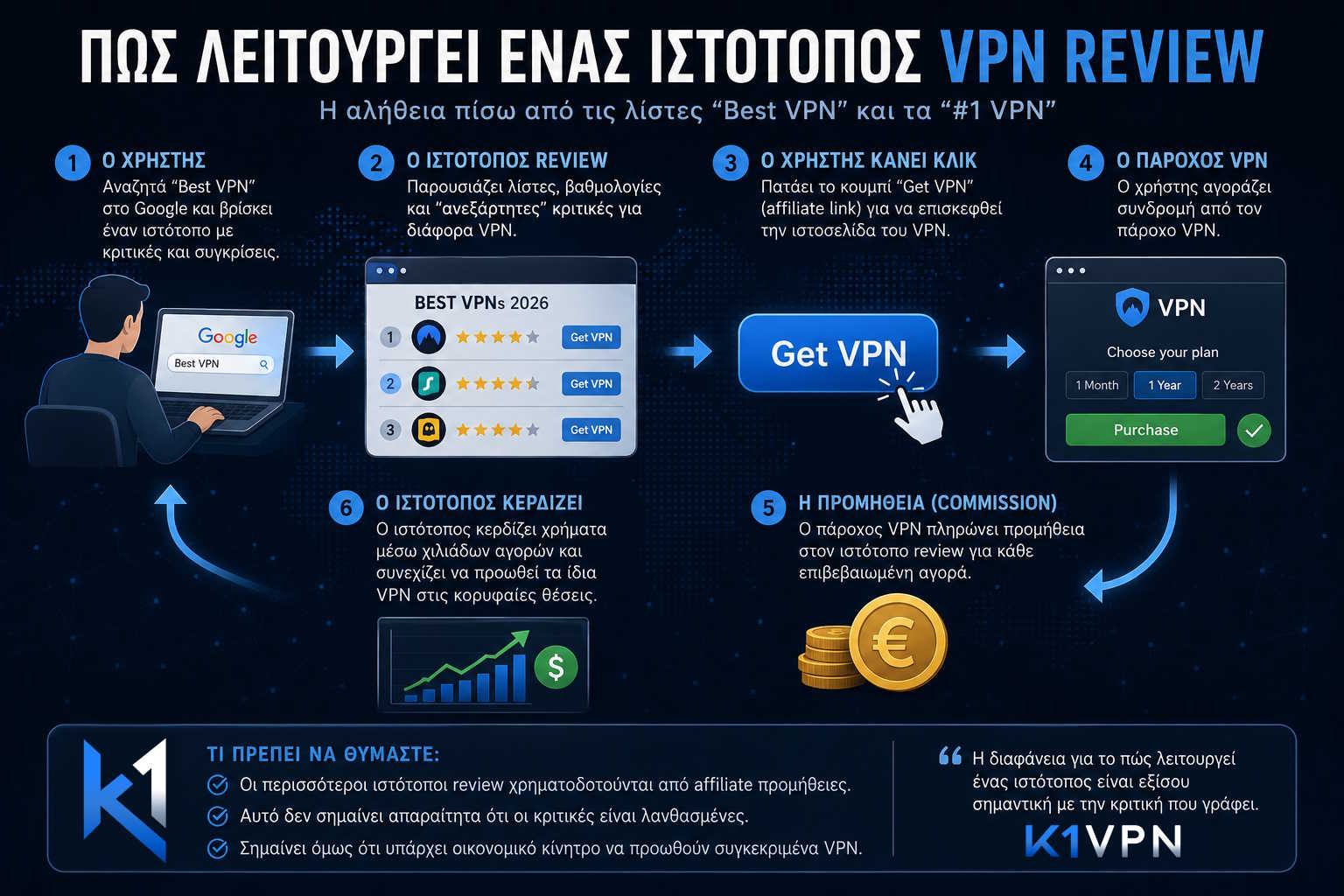
Most are funded primarily through affiliate marketing. The process is simple: a visitor reads a review, clicks the "Get VPN" button, buys a subscription, and the website earns a commission from the sale. This means the VPN listed first is not necessarily the one with the best technical performance. It is often the one that pays the highest commission. Makes sense?
This model is entirely legitimate, and most serious websites now disclose it publicly on "Disclosure" or "How We Make Money" pages. The problem arises when financial incentives directly influence objectivity - and the reader has no way of knowing when that happens.
So ask yourself: who funds this website? Is there a disclosed affiliate partnership? Is the ranking methodology explained? Are the downsides of each service mentioned, or only the advantages?
The situation is further complicated by the fact that several large corporate groups have also acquired stakes in industry news websites - not just in the VPN services themselves. This does not mean every article published is biased. It does mean, however, that corporate structure and financial relationships are things readers deserve to know about.
What "Best VPN Awards" are really worth
Every year dozens of awards appear: Best VPN 2026, Editor's Choice, Fastest VPN, Most Trusted VPN, VPN of the Year. Very few are given out by genuinely independent organizations or media outlets. Most are purely commercial distinctions - and the average user has little way of knowing who organizes the award, what the methodology is, whether financial partnerships are involved, or what the objective selection criteria were.
That's why we don't believe an "Award Winner" badge alone is enough to judge a VPN service.
What about security audits
A more substantive conversation has been happening in recent years around so-called "independent" security audits. Many large VPN providers commission specialized firms to review their apps, their no-logs policy, or their server architecture. This is undoubtedly a positive development - but it's important to understand exactly what an audit means, and what it doesn't.
An audit certifies that, at the specific point in time it was carried out and within the agreed scope, the auditor found certain results. It is not a permanent certification of flawless operation. It doesn't mean the situation was the same a few days before, or that it will stay the same a few days after. And it would only carry real value if it were conducted unannounced, rather than at a prearranged time and place.
There is also a question that is hard to answer: how independent can an audit really be when the party being audited is also the one paying for it?
Why K1VPN doesn't have a security audit today
Because we prefer to be honest.
K1VPN is a new, independent service. Instead of spending funds on marketing campaigns or expensive external audits that would carry mostly communicative value, we chose to invest in infrastructure, security, stability, and transparency.
This doesn't mean we don't consider genuinely independent audits important. Quite the opposite. As a service grows, independent technical reviews become increasingly valuable. Our goal is that once K1VPN passes a certain number of users, we will proceed with at least two independent audits that will be published publicly - hopefully within 2027.
Why K1VPN was created
K1VPN was created with full awareness of this reality. It was not built to become the largest VPN provider in the world, nor with the goal of boosting its valuation and chasing the next acquisition. It was built for a much simpler reason: to offer a service based on transparency, honesty, and independence.
From day one, we chose to be completely clear about what we offer and what we don't. We don't claim to be the best, the biggest, or the perfect option. We prefer to publicly share our choices, our technical decisions, and our philosophy, so that every user can judge us based on real facts rather than advertising slogans.
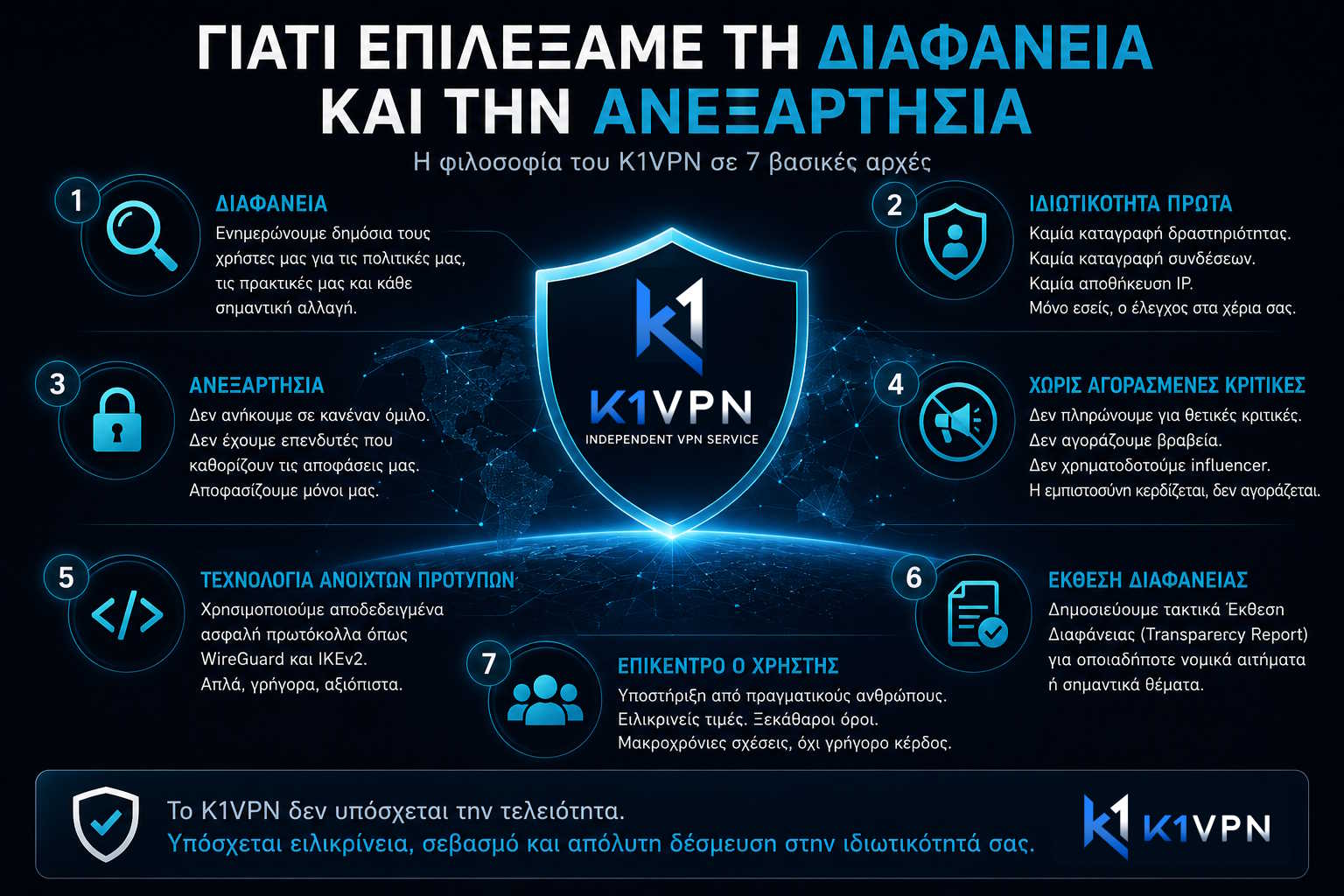
This philosophy rests on four principles.
Transparency. Users have the right to know how we operate, what technologies we use, what our policies are, and what limitations we currently have. That's why we publish a Transparency Report and explain our decisions publicly, instead of relying on vague slogans. We also evaluated the option of publishing a Warrant Canary and explain in detail why we settled on the Transparency Report as the more meaningful choice.
Honesty. We don't believe in exaggeration. We will never claim to be "the best VPN in the world," "100% unbreakable," or "completely anonymous." In cybersecurity, anyone who promises the absolute usually creates false expectations. We prefer to explain what we do, why we do it, and what trade-offs we've chosen to make.
Independence. We didn't create K1VPN with the goal of selling it. We don't intend to pay to appear on "Top VPN" lists, buy awards, or fund positive reviews. If someone believes K1VPN is worth recommending, we want that to be based on their own real experience, not a commercial arrangement.
Long-term trust. Trust isn't built by a nice logo or an aggressive ad campaign. It isn't built because a company shows up first on a list. It's built when a company's actions consistently match what it promises over time. That takes time, consistency, and a willingness to be accountable to your own users.
What we can and cannot promise
We cannot promise that we will always be the biggest, that we will always have the most servers, or that we will always be the cheapest option.
We can commit to something different. That we will keep operating with transparency. That we will publicly inform our users when something important changes. That we will not present marketing as technical reality. That we will admit our mistakes when we make them. And that every important decision will be guided by protecting privacy and serving our customers' interests.
That is why K1VPN was created. And that is the path we intend to follow.
Conclusion
The VPN market has changed radically over the past decade. Acquisitions, mergers, the consolidation of well-known services under a handful of large groups, and a review ecosystem largely driven by financial incentives are now a reality that the average user rarely perceives.
This doesn't mean large companies can't offer quality services. It means that independence, transparency, and corporate philosophy matter more and more for anyone who genuinely cares about privacy.
At K1VPN, we don't ask anyone to trust us just because we say so. We ask to be judged by our actions, our policies, our transparency, and the quality of the service we provide.
Because in cybersecurity, trust isn't given.
It's earned.